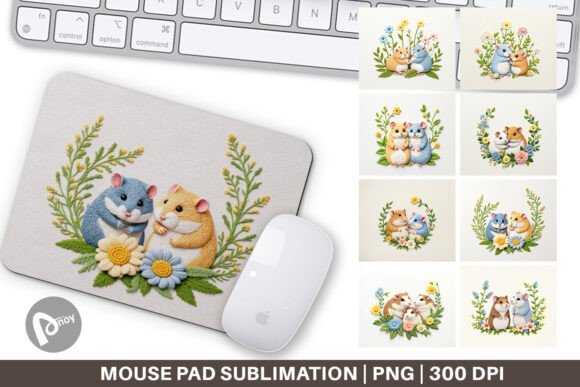
Reviewing Mouse Pad Hamster Embroidery for Business
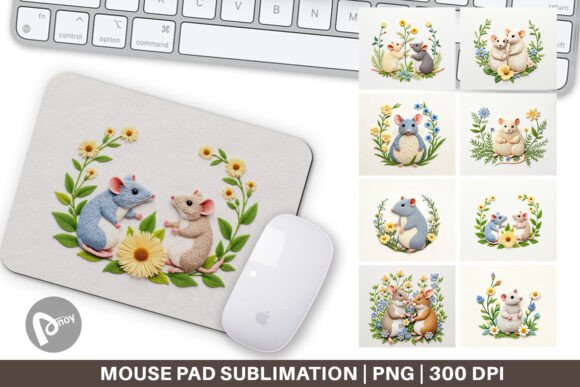
As an embroidery designer who has spent years digitizing logos and creating custom machine embroidery design assets for small businesses, I approach every new graphic with a critical eye. It is not just about whether an image looks cute on a screen; it is about how that image translates into thread, fabric, and ultimately, brand value. Recently, I evaluated the Mouse Pad Hamster Embroidery concept to determine its viability for commercial use. While the source material is listed under Illustrations and Graphics as a sublimation mouse pad design, the potential for adapting this aesthetic into stitched merchandise is significant for the right niche.
First Impressions: Visual Personality and Brand Fit
The initial impression of the Mouse Pad Hamster Embroidery theme is undeniably playful and friendly. In the world of branding, tone is everything. This design does not scream corporate rigidity; instead, it whispers approachability, creativity, and warmth. For businesses in the pet industry, children’s boutiques, creative studios, or cozy cafés, this visual language is gold. It feels handmade and personal, which aligns perfectly with the current consumer demand for authentic, non-mass-produced goods.
However, from a technical standpoint, we must look past the pixelated perfection of a PNG file. The description notes an "attractive and creative design to beautify your work desk," which suggests a level of detail that might be challenging in thread. My immediate concern is the translation of soft gradients and fine lines into solid stitch areas. A design that looks crisp on a mouse pad may require significant simplification to become a viable embroidery file. The charm lies in its whimsy, but the professionalism comes from how well we can execute that whimsy without creating a messy, over-stitched final product.
Real-World Applications for Small Business Merch
Let us imagine a local bakery or a pet grooming salon looking to expand their revenue streams through small business merch. How does this hamster motif perform in real scenarios?
- Embroidered Patches: This is perhaps the strongest application. An embroidered patch allows for controlled density and edge finishing. A hamster design can be punched out with a merrowed border, making it durable and easy to apply to various items. It becomes a collectible item for customers, enhancing brand identity through wearable art.
- Staff Uniforms and Aprons: For a café or boutique, apron embroidery featuring a small, simplified version of this character adds a touch of personality to staff attire. It breaks the monotony of standard uniforms and signals to customers that the business values fun and attention to detail.
- Tote Bags and Caps: A tote bag design centered around this character can turn a simple canvas bag into a statement piece. Similarly, cap embroidery on the front panel can work if the design is widened and simplified to fit the curved surface without distortion.
- Product Packaging Accents: Small stitched labels or tags attached to handmade products can utilize this graphic to reinforce the "handcrafted" narrative, increasing the perceived value of the finished product.
Technical Challenges and Design Constraints
While the aesthetic is appealing, the transition from a sublimation-ready PNG to a stitched reality requires careful navigation. The product description mentions receiving a "PNG FILE," which is a raster image, not a vector or stitch file. This is a crucial distinction for any digital embroidery file buyer. You cannot simply send a PNG to an embroidery machine. It must be digitized.
Here are the specific technical hurdles I foresee with the Mouse Pad Hamster Embroidery concept:
- Stitch Density and Detail: If the original illustration has fine whiskers or detailed fur textures, these will likely cause thread breaks or bunching if stitched at full resolution. In embroidery, less is often more. We must reduce stitch density in small areas and simplify outlines to ensure cleanliness.
- Fabric Texture and Stability: Stitching on textured fabrics like towels or thick canvas requires different stabilizers than smooth cotton. A complex design on a unstable fabric like a knit shirt can pucker. Testing on the actual fabric texture intended for production is non-negotiable.
- Size Limitations: The description hints at a 9.5 size, but for patches or chest logos, we are often working with much smaller dimensions. Tiny lettering or intricate details will vanish or become illegible below a certain inch threshold. We must verify if the design holds up at 2–3 inches wide.
- Color Contrast: Sublimation allows for millions of colors; embroidery is limited by thread availability and practicality. We need to check if the thread colors available can replicate the vibrancy of the original graphic without using an excessive number of color changes, which increases production time and cost.
Impact on Brand Identity and Customer Trust
Using a distinct character like this in your commercial embroidery lineup does more than just decorate an item; it builds recognition. When a customer sees that same hamster on a mug, a tote bag, and a staff apron, it creates visual consistency. This consistency fosters trust. It tells the customer that the brand is cohesive and professional.
Furthermore, in the era of Etsy and handmade markets, unique design assets set you apart. A generic logo is forgettable. A charming, well-executed embroidered character becomes a mascot. It encourages social sharing—customers are more likely to post a photo of a cute embroidered patch on their jacket than a plain text logo. This organic marketing boosts buyer engagement and drives traffic back to your shop.
Practical Notes for the Embroidery Professional
Before you commit to producing custom apparel or merchandise using this design, follow these steps to ensure quality:
- Test in Black and White: Before worrying about color, digitize and stitch the design in a single thread color. This reveals issues with spacing, connectivity, and shape clarity that color might hide.
- Check Hoop Size Compatibility: Confirm the hoop size required for your intended application. A large hoop might be unnecessary for a small chest logo, while a small hoop might restrict the design's impact on a tote bag.
- Use Proper Stabilizer: Match your stabilizer to your fabric. Cut-away for knits, tear-away for wovens, and wash-away for delicate or sheer fabrics. This prevents distortion and ensures the finished product looks professional after washing.
- Create a Printable Mockup: Use a printable mockup to show clients how the embroidery will look on different garments. This manages expectations and helps in selling the design before a single stitch is made.
- Verify Licensing: Since the source is a graphics file, ensure you have the rights to adapt it for commercial embroidery. Just because you bought the PNG does not automatically grant you the right to sell stitched versions of it. Always confirm commercial licensing terms.
In conclusion, the Mouse Pad Hamster Embroidery concept holds great promise for small businesses looking to inject personality into their merchandise. However, success lies in the execution. By respecting the limitations of the medium, simplifying where necessary, and focusing on high-quality digitizing, you can transform a simple graphic into a powerful tool for brand identity and customer connection. Whether used on a cap, a tote, or a patch, this design can elevate your product line from ordinary to exceptional.